
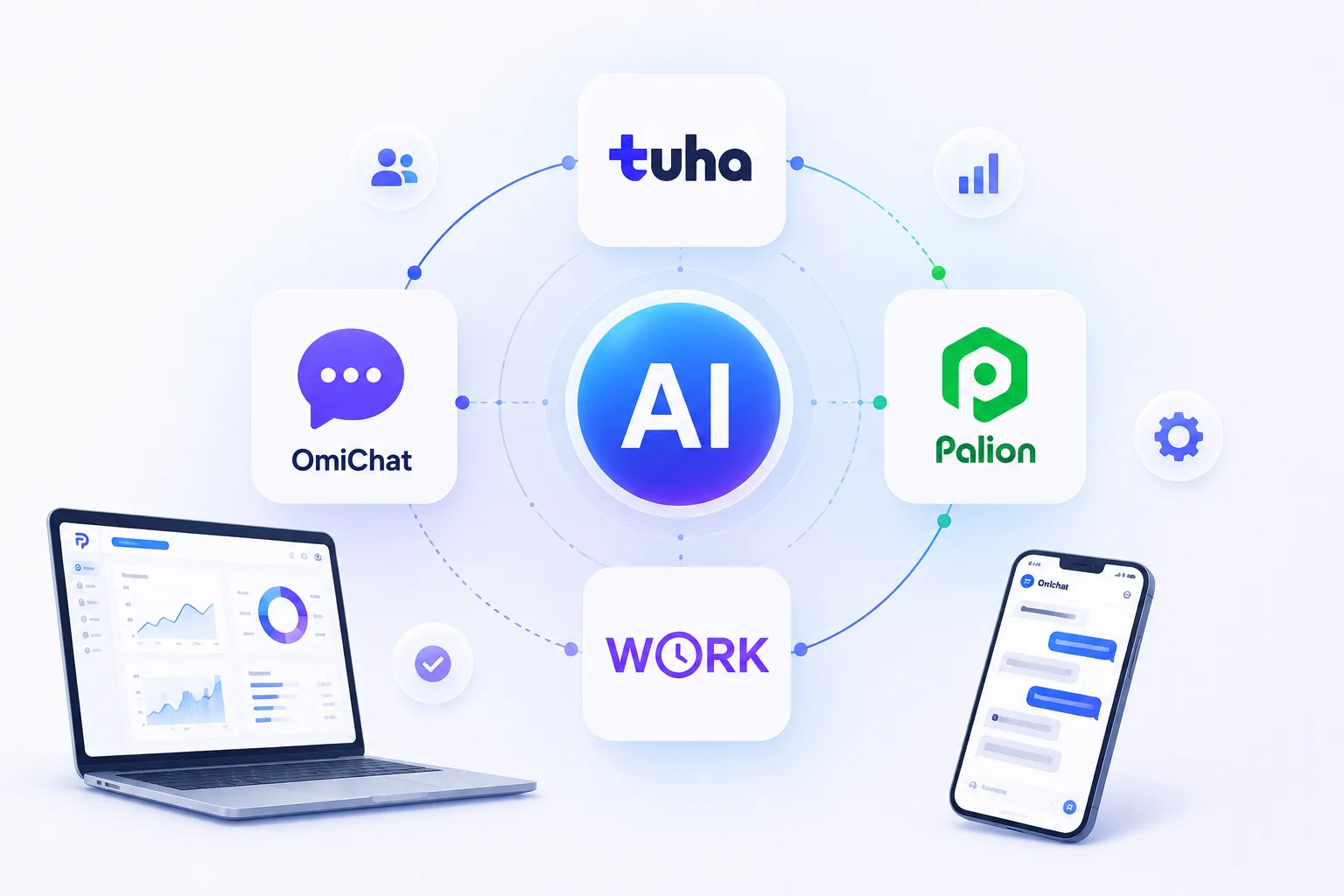
For many years, enterprise software has primarily been used to enter data, track activities, and help employees carry out manual tasks. This model is gradually changing in 2026 as market attention shifts from chatbots that answer questions to AI Agents capable of participating in business processes. With controlled access, an AI Agent can understand context, use the appropriate data and tools, carry out each step in a process, and hand issues over to a person when necessary. This marks a shift from AI that merely assists users to AI that can take part in carrying out real-world work.
From Answering Questions to Executing Processes
Traditional chatbots typically handle a single request, such as answering whether a product is in stock. When properly connected to authorized systems, an AI Agent can handle a broader sequence of tasks. It can receive a customer message, identify the need, look up relevant information, check business data, provide an appropriate response, and trigger approved actions. If a situation falls outside its scope, the AI Agent can hand it over to an employee while creating a follow-up task to ensure nothing is overlooked.
- Receive and classify customer requests.
- Look up customer, product, or order information from authorized data sources.
- Recommend or carry out actions according to established processes.
- Escalate sensitive, unusual, or unclear cases to the responsible employee.
- Record the outcome and create follow-up tasks when needed.
Connected Data Is the Foundation of Effective AI
AI only creates real value when it has sufficient context and the right data. If customer information is stored in one system, interaction history in another, orders separately, and internal tasks on a different platform, employees have to spend time bringing the information together before taking action. AI faces the same limitation when it is not connected to relevant data sources. As a result, the new focus is on linking business capabilities and data so that authorized systems can find, understand, and use information securely.
A seamless data flow can begin with a customer and a conversation, then connect to a lead, sales opportunity, order, customer service activity, internal task, and analytics. When these relationships are clearly designed, an AI Agent has a stronger basis for providing appropriate responses, maintaining context across departments, and helping employees work more quickly. New connection standards, including the Model Context Protocol, are attracting attention because they aim to help AI models interact with tools and data sources in a more structured way. Adoption still requires careful consideration of security, access permissions, and controllability.
Automation Must Go Hand in Hand with Permissions and Controls
AI Agents should not be given unlimited authority. A responsible system must clearly define which data the AI can view, which tools it can use, and which actions it can take. Actions affecting customers, finances, orders, or important information should include approval steps, scope limitations, and logs for auditing. Businesses also need to specify which cases AI can handle independently, which require it to ask the user for clarification, and which must be handed over to an employee.
- Assign permissions based on role and purpose.
- Limit the actions the AI Agent is allowed to take.
- Log requests, data used, and processing outcomes.
- Establish approval mechanisms for high-risk actions.
- Regularly evaluate accuracy, safety, and the ability to hand cases over to people.
People Still Have the Final Say
An agentic workflow does not mean removing people from the process. Instead, it creates a clearer division of responsibilities between systems and employees. AI can handle information searches, summarize interaction histories, check conditions, update data, or create tasks. Employees can focus on decisions that require experience, handling exceptions, managing sensitive conversations, and building customer relationships. The ability to hand cases over at the right time is an important part of system quality, not a sign that AI is performing poorly.
For effective implementation, businesses should start with a specific process that has relatively complete data and clear evaluation criteria. After the pilot phase, teams can review cases the AI handled inadequately, adjust permissions, and expand to other processes. A step-by-step approach helps businesses control risk, avoid automating unstable processes, and ensure employees understand how to work with the system.
Preparing Vietnamese Businesses for the Next Stage
In 2026, adopting AI Agents is not simply a matter of choosing a new tool. Businesses need to reassess how data is organized, how departments collaborate, and how permissions are managed within each process. A suitable platform should support data integration, task management, processing history tracking, and continued human involvement at the points where it is needed. This is also an opportunity for businesses to standardize processes before automating them, rather than simply adding AI to an already fragmented system.
For stores and businesses in Vietnam, initial applications could focus on customer service, order lookups, request intake, lead classification, and task creation for employees. The goal is not to have AI replace all operations, but to connect information more effectively, reduce repetitive work, and help teams respond based on a solid understanding of the situation. When data, processes, and controls are properly prepared, AI Agents can become a practical part of enterprise software in this new phase.